Ground, materials & project understanding
Understand the ground.
Follow the evidence.
An independent educational journal on geotechnical context, material records, inspections and the information that supports a clear project conversation.
Start here · Ground & context
Start with a question.
Build a clearer brief.
The purpose of the work shapes what information is useful.
Read the guide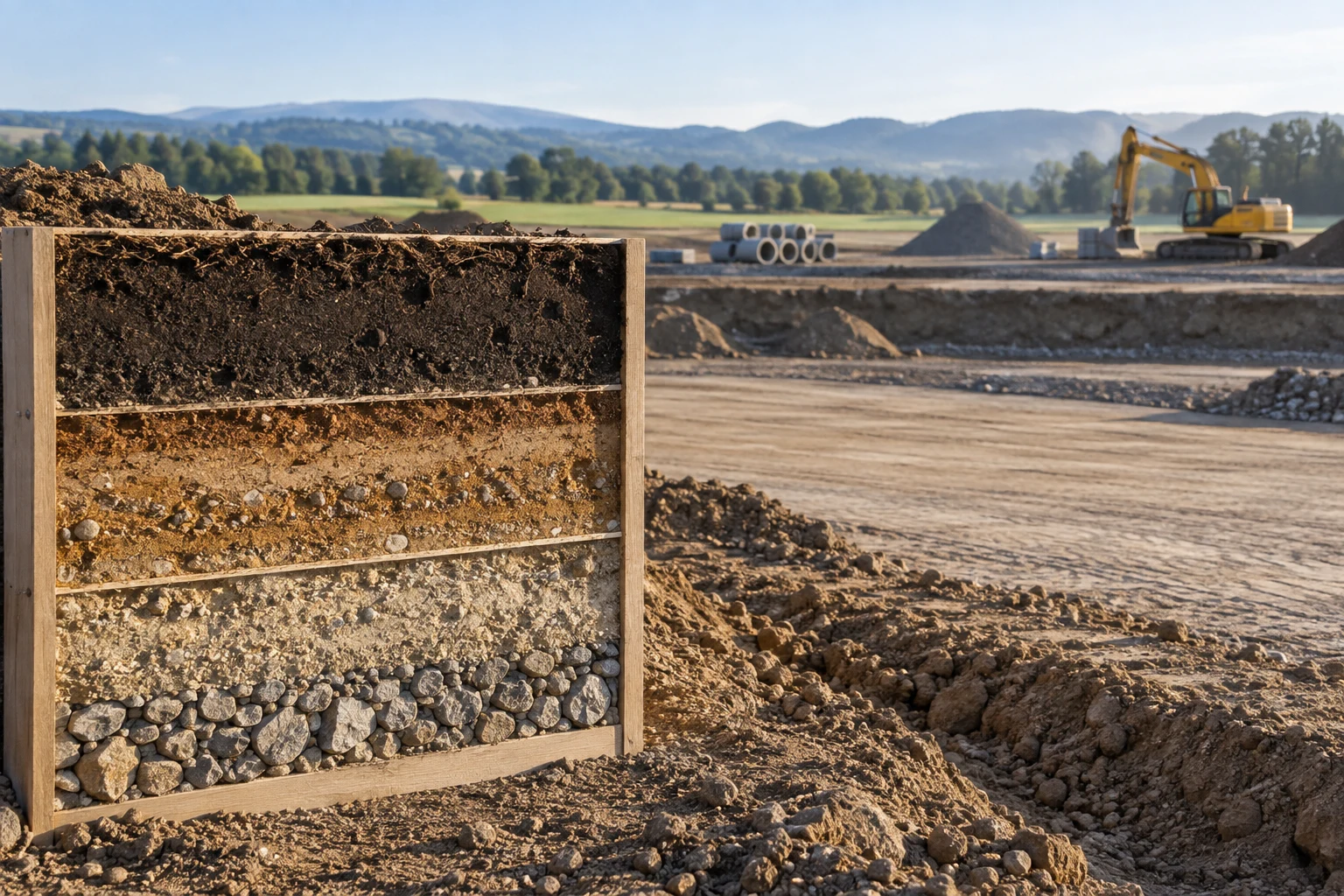

Materials & evidence
A material sample needs an identity
Environmental context
Past land use can raise a question
Ground & context
5 articlesGround & context
Start a ground investigation with a clear question
The purpose of the work shapes what information is useful.
Read the articleGround & context
A site history is a collection of evidence
Dates and source identities matter when reading old records.
Read the articleGround & context
Read a location plan before interpreting a result
Information needs a spatial reference that the team understands.
Read the articleGround & context
Keep observations distinct from interpretations
A useful field record says what was seen and what was concluded.
Read the articleGround & context
Discuss the limits of a ground report
A report supports a particular purpose under stated conditions.
Read the articleMaterials & evidence
5 articlesMaterials & evidence
A material sample needs an identity
A test result must be connected to the item it describes.
Read the articleMaterials & evidence
Read the test method alongside the number
A result has meaning within a defined evaluation.
Read the articleMaterials & evidence
Plan a laboratory handoff as an information task
The receiving team needs context as well as a specimen.
Read the articleMaterials & evidence
A delivery document is part of the material record
Paperwork helps connect the specification to what arrived.
Read the articleMaterials & evidence
Keep appearance and performance separate
A visual impression answers only some questions.
Read the articleInspection & records
5 articlesInspection & records
Give an inspection a defined scope
An observation visit should have a clear purpose.
Read the articleInspection & records
Write an observation so another reader can locate it
Context makes a brief note more useful.
Read the articleInspection & records
Photographs need captions and context
An image can support a record without explaining itself.
Read the articleInspection & records
Record a deviation without guessing its cause
A clear description supports the next qualified review.
Read the articleInspection & records
Close a follow-up item with evidence
A status label should explain why the issue is considered resolved.
Read the articleEnvironmental context
5 articlesEnvironmental context
Past land use can raise a question
Historical information needs appropriate professional interpretation.
Read the articleEnvironmental context
Keep an environmental brief tied to the proposal
A useful scope reflects what is actually planned.
Read the articleEnvironmental context
Chain-of-custody records preserve an information trail
Handling context belongs with an environmental sample.
Read the articleEnvironmental context
A map is a tool for discussing coverage
Displayed points do not establish what remains unknown between them.
Read the articleEnvironmental context
Explain environmental findings without removing qualifications
A readable summary must retain the meaning of the report.
Read the articleProject documentation
5 articlesProject documentation
Create a report register that people can use
A short list can prevent the wrong document entering a decision.
Read the articleProject documentation
Keep a summary linked to its source
A short explanation should not become an orphaned instruction.
Read the articleProject documentation
Manage a technical question as a tracked item
A clear request makes follow-up easier than an informal conversation.
Read the articleProject documentation
A change needs a record of its effect
New information can alter more than one document.
Read the articleProject documentation
Prepare a useful technical handover
The receiving team needs current information and visible open items.
Read the articleClient conversations
5 articlesClient conversations
Ask a consultant about the scope before the fee
A quotation is meaningful when the intended work is clear.
Read the articleClient conversations
Define who will interpret a technical result
Delivery and decision-making are different responsibilities.
Read the articleClient conversations
Plan access as part of the professional work
Coordination requirements deserve attention before a visit.
Read the articleClient conversations
A schedule needs clear starting conditions
A timeline is easier to assess when dependencies are named.
Read the articleClient conversations
Keep a plain-language project question precise
Clarity helps a specialist answer the concern you actually have.
Read the articleA considered approach.
Independent educational publication inspired by this domain’s engineering and testing heritage. Not affiliated with Inspecsol or successor organisations. Project-specific technical work belongs with appropriately qualified professionals. Original editorial illustrations.